A one day trip to Shirakawa-go Gassho Village + Hida Takayama Old Town is honestly the smartest way to travel from Nagoya. With the KKday one day bus tour, you can visit the UNESCO World Heritage village of Shirakawa-go and the Little Kyoto of Hida, the Takayama Old Town, all in the same day. Transportation is fully included and a guide shows you where to go, so you never have to worry about mountain bus transfers, winter road conditions, or whether you can make it back on time. It is perfect for first time visitors to Central Japan, for trips with parents or grandparents, and for families with kids. It is made for anyone who wants a relaxed day but still wants to see two must visit spots in one go.
Why should I choose a bus tour from Nagoya instead of going by myself?
A guided bus tour removes the stress of navigating mountain bus transfers, booking tickets, or driving in winter conditions. It is the easiest way to see both destinations in one day, especially for families and first-timers.
Does the tour include lunch, and what kind of food is served?
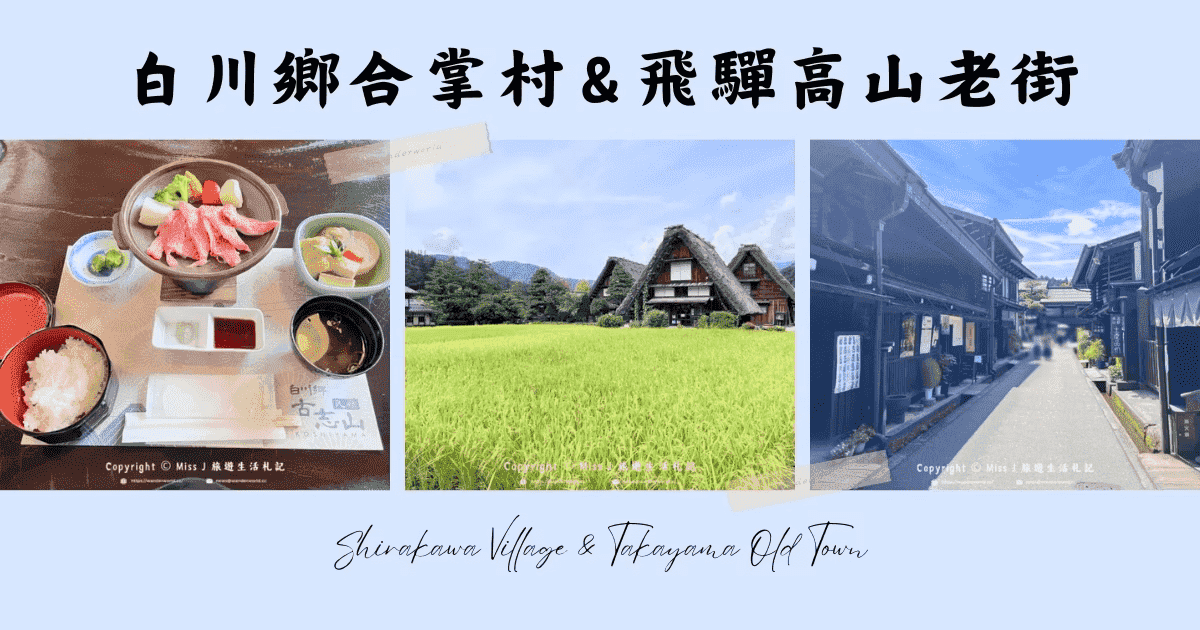
Yes, lunch time is included. You can even upgrade to a premium meal, such as a sizzling Hida beef grilled set with oden and firm Gokayama tofu, served at a local restaurant near Shirakawa-go.
What are the must-eat street foods in Hida Takayama Old Town?
Don’t miss the freshly made Hida beef sushi, grilled Hida beef skewers, and the classic gohei mochi (grilled rice cake with miso glaze). Also, look out for the fun monkey mascot ice pops at the morning market!
Can I walk anywhere I want in Shirakawa-go, and are there any rules?
Shirakawa-go is a real residential village, not just a tourist park. To protect the wooden and thatched-roof houses, parking is strictly regulated, and smoking is only allowed in designated areas to prevent fires.
Shirakawa-go Gassho Village + Hida Takayama Old Town • Attraction Information
Address:【 Shirakawa-go Gassho Village 】517 Hatogaya, Shirakawa, Ono District, Gifu 501-5692, Japan ( Google Map )、【 Hida Takayama Old Town 】2-18 Hanaokamachi, Takayama City, Gifu 506-0054, Japan ( Google Map )
Business Hours:Shirakawa-go Gassho Village is a real lived-in mountain settlement, not a theme park, so there is no single official opening time for the whole area. Hida Takayama Old Town is also an open district with many individual shops, and each store has its own hours.
Shirakawa-go: The most convenient time to visit is around 09:00 to 17:00, since the visitor center, parking area, and the gassho houses that are open to the public all operate during this window.
Hida Takayama Old Town: Plan to explore and eat between 09:00 and 17:00, and pair it with Miyagawa Morning Market in the early morning plus Takayama Jinya during the day for the smoothest schedule.
Here is how you can get here:【 Easiest option: One day bus tour from Nagoya 】Round trip coach, trilingual guides in Chinese, English, and Japanese, with the schedule handled so you do not need to check the last bus. (KKday、Klook) 【 Self-drive or Taxi 】When driving to Shirakawa-go, you cannot just drive directly into the village. All private cars must be parked in designated parking areas such as the village-run Seseragi Park Parking Lot, which usually charges a fee, often around 1,000 yen per visit. This is to avoid blocking local residents and the very narrow village roads. The parking areas mainly operate during daytime hours and only extend into the evening for special events such as illumination. In winter you will need snow tires or chains because the mountain roads can freeze, and many travelers prefer to join a bus tour instead so they do not have to worry about winter driving. 【 Bus 】Nagoya → Shirakawa-go. There are highway buses from the Meitetsu Bus Center in Nagoya that go directly to Shirakawa-go, operated by multiple companies. The ride takes about 2 hours 30 minutes to 2 hours 45 minutes, and a one way ticket is roughly 3,400 to 4,200 yen depending on the season and the time slot. Seats usually need to be reserved in advance, and popular departures can sell out quickly. Takayama → Shirakawa-go. From the Nohi Bus Center in Takayama, there are buses to Shirakawa-go that take about 50 minutes one way, with a fare of around 2,800 yen. There are several round trip buses per day, and you can also continue on the same line toward Kanazawa, Toyama, or Takaoka. This route is very popular, especially during holidays and in winter, so advance reservations are recommended. 【 JR Limited Express plus walking (Nagoya ⇄ Takayama) 】Take the JR Limited Express Hida from Nagoya to Takayama Station. The ride takes about 2 hours 30 to 40 minutes. From the station, it is only about a 10 to 15 minute walk to Hida Takayama Old Town and the Miyagawa Morning Market.
Shirakawa-go Gassho Village
Hida Takayama Old Town
Shirakawa-go Gassho Village, also known as the Shirakawa-go Gassho style settlement, is a small village in the mountains of Gifu Prefecture, surrounded by deep forest. The village is famous for its traditional thatched roof houses called gassho style. The steep roof looks like two hands pressed together in prayer, and when it snows in winter the entire village turns into a real life snow fairy tale. The whole settlement is registered as a UNESCO World Cultural Heritage site and it still preserves the lifestyle of a traditional mountain village.
Hida Takayama Old Town, often called Little Kyoto of Hida, is the historic district in Takayama City in northern Gifu Prefecture. Wooden townhouses from the Edo period, local sake breweries, shops selling Hida beef skewers, and the Miyagawa Morning Market are all within walking distance, which makes it incredibly easy to explore, eat, and take photos. The liveliest area is around Sanmachi Street. Wooden lattice windows, dark timber storefronts, and the round cedar balls that mark the sake shops make you feel like you just walked straight into old Japan.
Shirakawa-go Gassho Village + Hida Takayama Old Town • KKday One Day Tour from Nagoya
If you’d rather skip the hassle of arranging your own transportation, I highly recommend joining the [Departing from Nagoya] Shirakawa-go & Hida Takayama Old Street Day Tour. Not only is this tour guaranteed to depart even with just one person, but you can also upgrade your lunch to a mouth-watering Kobe beef or Hida beef set meal for a small extra fee. It is incredibly convenient for independent travelers!
Meeting Point: Nagoya VIP LINER Bus Stop ( GoogleMap )
Meeting Time: 07:50 (subject to the time shown on the official webpage)
Itinerary Details: Depart from the Nagoya VIP LINER Bus Stop→Free time in Hida Takayama Old Town→Visit the UNESCO World Heritage site Shirakawa-go (includes lunch time. Guests without the meal option will arrange their own lunch)→Arrive at Nagoya Station
Nagoya VIP LINER Bus Stop
Shirakawa-go Gassho Village + Hida Takayama Old Town • Must See Highlights of the KKday One Day Tour from Nagoya
Hida Takayama Old Town follows the idea of treating the entire old city like a living museum. The historic district was once a castle town and merchant quarter in the Edo period, and it still preserves its dark wooden townhouses, local sake breweries, traditional snack shops, and handmade craft stores.
This is everyday street life in Takayama City. The covered shopping arcade stretches down the road, and turning right leads into the main strolling area packed with street snacks, local sake breweries, and souvenir shops, making it super easy to explore and eat on foot.
A nostalgic little shop in the old town, with an adorable retro character figure standing at the entrance.
Sanmachi Historic District is lined with traditional wooden townhouses from the Edo period, with local sake breweries and small specialty shops on both sides. Under the blue sky it feels like stepping straight into a little Kyoto style old castle town.
A popular souvenir shop in the old town, with Hida only keychains, lucky charms, and local design T shirts displayed right at the entrance.
Inside this traditional wooden townhouse, you can taste local sake and grab a soft serve ice cream.
This popular senbei shop has a classic wooden townhouse facade with old wooden wagon wheels at the entrance, and inside it is packed with handmade rice crackers in local soy sauce flavors. You can buy freshly grilled senbei to eat on the spot or choose nicely packed souvenirs to take home.
The shelves are packed with Hida limited rice crackers, from extra large soy sauce grilled senbei to bite sized crispy rice snacks.
They also have individually packed senbei so you can buy just a few, with flavors like Hida miso, spicy pepper, and sesame seasoning lined up neatly. It is perfect for snacking right away or bringing back to the hotel to enjoy with a beer.
This is the most popular Hida beef sushi shop, and the line of travelers waiting under the sun for freshly made wagyu sushi is seriously long. It is crazy popular, but since our free time was limited we decided not to wait, especially because the one day tour already includes Hida beef for lunch.
A street stall in the old town grills gohei mochi and soy sauce glaze dango, two classic Hida snacks.
The charcoal aroma drifts all the way down the street and it is so tempting that it is almost impossible to walk by without buying one.
The freshly grilled gohei mochi is brushed with a rich miso glaze, the surface is slightly charred with a sweet and salty aroma, and each bite is soft, sticky rice with a hint of smoky charcoal. Holding it warm in your hand feels like tasting the signature street snack you absolutely have to try here.
This miffy themed shop blends cuteness with a traditional wooden townhouse style. A little bunny with a flower crown waits at the entrance, and inside they sell collaboration sweets and small goods. It is the kind of spot everyone stops to photograph while strolling.
The round light above the entrance is painted with miffy’s face, and the traditional wooden Japanese doorway looks even sweeter with that little bunny expression.
From the view at Rafutabashi Bridge, the bright red railing contrasts with the clear river and lush green trees, and above you is the deep blue Takayama summer sky. It is one of the most beautiful photo stops while walking around the old town.
This is the main entrance of Takayama Jinya, a designated Important Cultural Property. It once served as the Edo shogunate’s administrative office in the Hida region, and the wooden buildings are preserved in remarkable condition. It is now open to the public and is a must visit spot to understand Hida’s history and what government work looked like in the samurai era.
Step into the courtyard and you are immediately in a classic Edo period official residence layout, with a gravel garden, dark wooden main building, and banners marked with the family crest.
At the entrance of Miyagawa Morning Market, a long row of stalls stretches along the river until around midday, selling everything from fresh produce and pickles to handmade snacks.
At this snack stall in the morning market, the steam baskets are constantly puffing, and the specialties are Hida beef buns and monkey mascot ice pops in four different flavors.
The Monkey Baby Ice Pop in Hida Takayama is a local specialty dessert inspired by the traditional Sarubobo doll, a lucky monkey shaped charm. It comes in flavors like Hida milk, strawberry, matcha, and chocolate. I already took a bite out of the monkey’s head.
At the seasonal fruit stand in Miyagawa Morning Market, peaches are piled up by the box, the price is surprisingly good, and it is impossible not to grab a few to take back to the hotel.
Around midday it is time to sit down for a Hida beef set meal.
Lunch on the itinerary is at a restaurant called Koshiyama, located near the gassho village.
Koshiyama Menu
We booked the Hida beef grilled set with oden and Gokayama tofu. The Hida beef hits the table sizzling, with a lightly charred outside and an incredibly tender inside, and that deep mountain style beef flavor you really only taste out here. It comes with a hot bowl of oden, and the radish and tofu skin are completely soaked with broth. The Gokayama tofu is a firm local tofu with a rich soybean taste and a solid bite, and it goes perfectly with the mountain vegetable side dishes.
Shirakawa-go Gassho Village is not a theme park built just for tourists to take pictures. It is a real mountain village where people still live. To protect the traditional thatched gassho style houses, especially in winter when heavy snow and fire risk are big concerns, the local residents, the town office, and the tourism association created clear visitor rules. Parking outside of designated areas is restricted, walking while smoking regular cigarettes is not allowed, and smoking is limited to marked smoking areas, including special zones for heated tobacco only. All of this is to protect the precious gassho houses and reduce fire risk, while keeping the village comfortable for visitors. Before entering the village area, all private cars must be parked in the public parking lot, and travelers walk across Deai Bridge to enter the settlement.
From the view on Deai Bridge, you can see clear mountain water and a wide rocky riverbed below, with a ring of deep green mountains wrapping around the village in the distance.
The square concrete blocks along the riverbank are stacked like puzzle pieces, the sound of the water is soft, and the whole scene feels like the slow everyday rhythm of a quiet mountain village.
This rare thatched bell gate in the village has heavy wooden beams and a thick straw roof, and looking up from the stone steps it feels incredibly majestic.
The most iconic gassho style thatched houses line up in front of a wide green rice field, with the steep triangular roofs shaped like hands pressed together in prayer.
The gassho style farmhouse sits quietly by the rice fields and irrigation channels, and its thick thatched roof stands out sharply against the backdrop of the surrounding mountains.
Wada House, designated as an Important Cultural Property of Japan, is one of the best preserved large gassho style family homes in the village. The massive thatched roof and wooden exterior are incredibly striking, and the clear water channel running in front makes it feel like stepping straight into everyday mountain life from a hundred years ago.
Inside the Wada House, large tatami rooms, sliding wooden doors and paper shoji partitions are still intact, along with exposed beams and the family Buddhist altar. Stepping in feels like seeing the real living space of a big gassho style household up close, as if daily life from the Edo to Meiji era was sealed and kept just for you to walk through.
The Wada House shows how silkworms were raised, with trays of mulberry leaves and the silkworms themselves, and you can also see traditional lacquerware and everyday household tools. It lays out the entire way a gassho farmhouse sustained itself, from living and raising silkworms to doing handcraft work at home.
The mid level loft of the Wada House is filled with wooden barrels, weaving tools, farming gear, and everyday equipment. The heavy beams sit low over your head, so you can clearly see how the attic space in a gassho house was used for storage and for doing handwork.
From the upstairs window of the Wada House you can look out over wide rice fields and a row of gassho style thatched houses.
The rice fields look like a living map of the Japanese countryside, with waves of green stretching all the way to the base of the mountains. Gassho style thatched houses sit quietly along the edges of the fields and wooden footpaths, and the whole scene feels like pure World Heritage level mountain village beauty.
The attic of the gassho style farmhouse is supported by thick wooden beams tied with straw ropes, and the floor has turned a glossy dark color from years of smoke. Baskets, bamboo tools, and farming equipment are laid out around the space, and you can still see traces of how people once raised silkworms, dried cocoons, and did handwork here.
The irori hearth inside a gassho house is the heart of family life, where everyone keeps warm, cooks, and talks together. The charcoal fire burns for long hours and smokes the beams and roof, which not only provides heat but also helps protect the wood from insects and moisture.
At the takeaway window of Imatō Store you can grab Hida beef croquettes, Hida beef skewers, and freshly fried snacks, plus local sodas. After walking around the gassho village, it feels perfect to just stop here, eat something hot straight from the fryer, and refuel on the spot.
The soft serve flavors range from Hida milk to local sake.
The Hida beef sausage skewer is served right off the grill, with a lightly charred and juicy skin. Each bite is full of rich beef flavor and meat juices, and eating it while walking feels like tasting the true local street food spirit.
The freshly fried Hida beef croquette has a crust so crispy it crackles, and inside is fluffy mashed potato mixed with juicy beef and rich fat. Every bite is piping hot and incredibly juicy.
Shirakawa-go Gassho Village + Hida Takayama Old Town • Honest Reviews
With the KKday tour from Nagoya, you meet in the morning, get on the sightseeing bus, take a nap, and wake up already in Hida Takayama Old Town. The guide explains everything in Chinese, like which Hida beef shop is the best value and which Miyagawa Morning Market stall you should hit first, and even reminds you that you can pay by card at Takayama Jinya. By evening you are back in Nagoya comfortably, legs tired but heart totally satisfied, thinking only one thing: having a guide and a private bus is so much easier than trying to figure out all the buses on your own.
Shirakawa-go Gassho Village + Hida Takayama Old Town • More Information
Top 5 Popular Attractions NearShirakawa-go Gassho Village + Hida Takayama Old Town
Tenshukaku Observatory : This is the famous viewpoint where you can capture the entire row of gassho thatched rooftops with the snowy mountain valley in the background. There are also snacks and souvenir shops on site, making it the must shoot angle in Shirakawa-go. ( GoogleMap )
Wada House :The largest traditional gassho style residence in the village and a nationally designated Important Cultural Property. The interior is open to visitors, where you can see how a large family once lived, along with silkworm raising tools and massive wooden beams. ( GoogleMap )
Shirakawa-go no Yu : A natural hot spring right inside the World Heritage village, complete with an open air bath where you can soak while looking out at the mountains. It is the most relaxing way to recover after walking around the village. ( GoogleMap )
Takayama Jinya : This was the local government office during the Edo shogunate, and the original buildings are still beautifully preserved. Admission starts from 440 yen, and credit cards are accepted on site. Anyone interested in Japanese history, samurai era administration, or Edo period culture can easily spend a long time exploring here. ( GoogleMap )
Miyagawa Morning Market : A traditional market with over 200 years of history and known as one of the three great morning markets in Japan. Stalls open along the Miyagawa River every morning, selling everything from local produce to handmade souvenirs. After browsing, you can walk straight into Hida Takayama Old Town. ( GoogleMap )
Hi, I’m Miss J from Taipei. I love traveling, taking photos, and writing, and I tuck all the scenery, flavors, and stories I encounter along the way into my pocket. I translate every piece I write into English, Japanese, and Korean because I want people all over the world to be able to share in these beautiful moments together.Have a question? Feel free to drop me a line :)

 Why should I choose a bus tour from Nagoya instead of going by myself?
 A guided bus tour removes the stress of navigating mountain bus transfers, booking tickets, or driving in winter conditions. It is the easiest way to see both destinations in one day, especially for families and first-timers.